
Meeting Room Rental in Dubai: The Complete Guide for Businesses
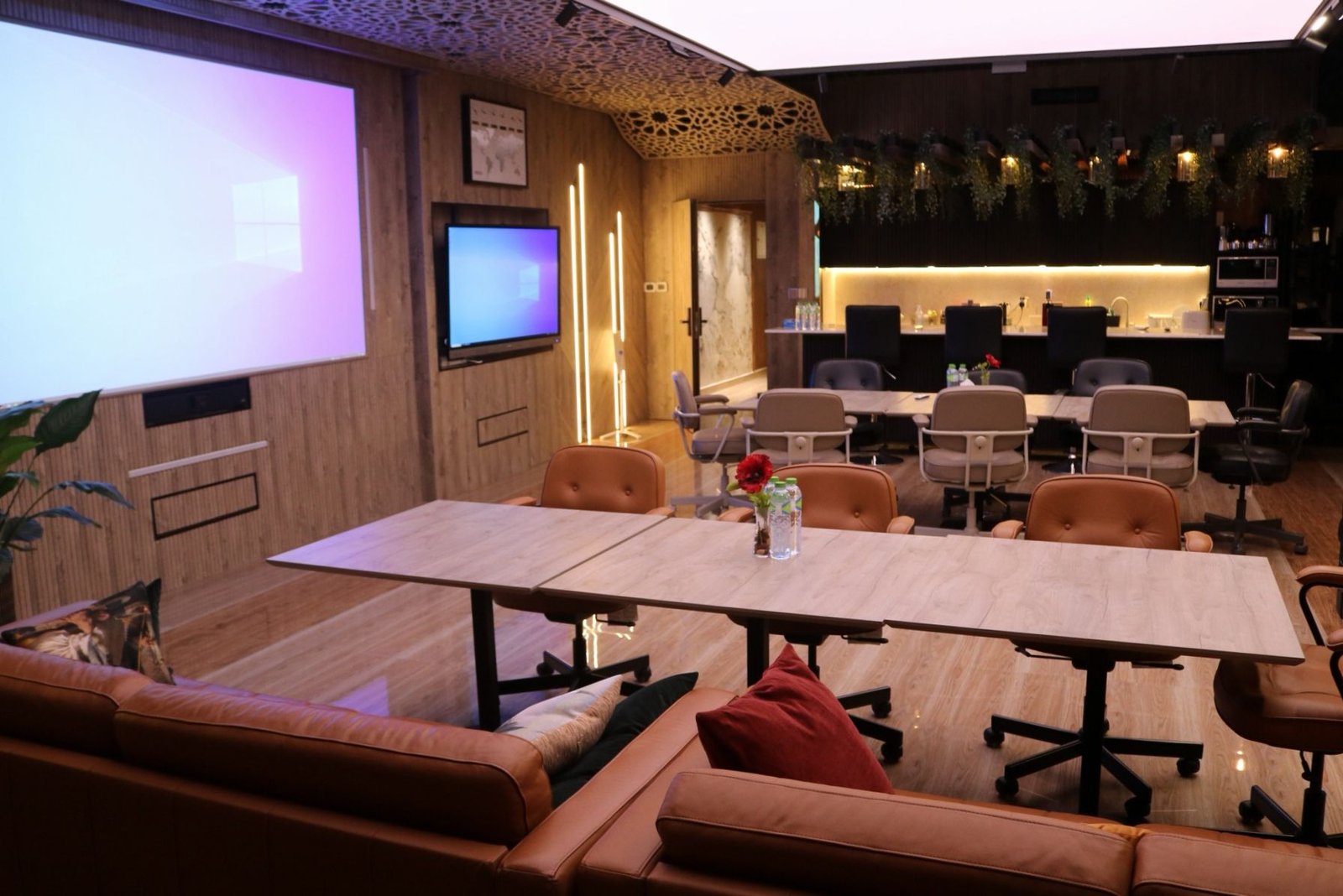
Quick answer: the right meeting room rental in Dubai is the one that fits your headcount comfortably, comes with tested AV, is easy for your guests to reach and park at, and quotes one clear price for everything you need. Location and price get most of the attention, but the details — setup, sound, breaks and support — decide whether the meeting actually works.
Dubai has no shortage of places to hold a meeting: hotel function rooms, serviced business centres, coworking spaces and private venues. They all look similar in photos. This guide walks through what genuinely separates a good meeting room from an average one, and the questions worth asking before you confirm a booking.
1. Start with the people, not the room
Count who is coming, then add a margin. A room that seats exactly your number in theatre style will feel cramped once you add laptops, documents and coffee. As a rule of thumb, plan for more space per person the longer the session runs and the more people need to write, type or work at a table.
Ask how the room's capacity changes with layout. Our own meeting and training room seats 14 around a boardroom table, 16 in a U-shape and up to 25 in theatre style — the same room, very different experiences. A venue that can only quote one number has not thought about how you will use it.
2. Choose the layout for the purpose
- Boardroom — one table, everyone facing each other. Best for board meetings, negotiations and decisions.
- U-shape — open at one end toward a screen or trainer. Ideal for workshops and interactive training.
- Classroom — rows of tables facing forward. Good for note-heavy technical training.
- Theatre — rows of chairs, no tables. Maximum capacity for briefings, launches and seminars.
We explain each one in more depth in Meeting room layouts explained. The key point: the venue should reset the room to your layout before you arrive, at no extra charge.
3. Test the technology before the day
Most failed meetings fail on AV. A screen that won't connect, a microphone nobody can hear, or a video call where remote attendees see one wide, blurry shot of the room all cost you credibility. Ask specifically:
- How many screens are there, and can everyone read them from the back row?
- Is there a camera that follows the speaker for hybrid meetings, or only a fixed webcam?
- How is sound handled — can people speak without passing a microphone?
- Will someone set up and test with you before guests arrive, and stay reachable during the session?
Our room runs three screens including 4K projection, two smart cameras that track the speaker, 5.1 surround sound and an interactive whiteboard, and we test everything with you before delegates walk in. If hybrid matters, read what good video conferencing actually needs.
4. Look at the breaks, not just the meeting
Half a day is four hours. Guests will want coffee, water, a quiet corner to take a call, clean washrooms and, for many, a place to pray. These details shape how people remember the day. Check what is included in the price — hot drinks all day should be standard — and what catering costs if you need a working lunch.
5. Think about the journey in
A central address is not automatically convenient. Parking charges, permits and long walks from car parks add friction for every guest. Venues outside the busiest districts often win on access: free parking in the building, simple directions and less traffic stress. We cover this in why Dubai Investment Park works for corporate meetings.
6. Understand the pricing model
Meeting rooms in Dubai are priced by the hour, the half day or the full day. Hourly rates look cheap but rarely include setup, AV support or refreshments, and short slots leave no buffer for overruns. Half-day and full-day packages usually work out better for anything longer than two hours. Our guide to meeting room prices in Dubai breaks down what you should expect to be included.
7. Questions to ask before you pay
- What exactly is included — room, AV, setup, drinks, support?
- What are the extras, and are they quoted in writing?
- What is the minimum booking, and what time can we get in?
- What is the policy if we need to move or cancel?
- Can you invoice our company, and in which currency?
- Can we visit beforehand?
A good venue answers all of these quickly and puts them in a fixed quote. If the answers are vague, the day will be too.
8. Common mistakes when renting a meeting room
- Booking by capacity alone. A room "for 25" may only be comfortable for 25 in theatre rows. If your group needs tables, the real number is lower.
- Skipping the AV test. Ten minutes of testing the day before saves the first half hour of your meeting.
- Forgetting the people online. If even one person joins remotely, plan the camera and audio for them.
- Underestimating the breaks. A meeting that runs into lunch without food planned loses momentum fast.
- Not visiting. Photos flatter. A ten-minute visit tells you about light, noise, chairs and access.
Which type of venue suits which meeting?
Coworking meeting rooms work well for short internal meetings and one-to-ones where cost matters most. Hotel function rooms suit large events with banqueting. Dedicated private meeting and training rooms sit in between: they are built for groups of roughly 8 to 25, they are quiet and private, and the AV is designed for presenting and hybrid calls rather than added as an afterthought. For board meetings, client workshops and training days, that middle option usually delivers the best result for the budget.
A simple booking timeline
- Two weeks before: confirm headcount, layout and date; request a fixed quote.
- One week before: confirm catering and dietary needs; send guests the address and parking details.
- Two days before: share slides and test the video platform if anyone is remote.
- On the day: arrive 30 minutes early to check the setup.
Frequently asked questions
How far in advance should I book a meeting room in Dubai?
For board meetings and training, one to two weeks is comfortable. Popular weekdays fill first, so book earlier if your date is fixed.
Can I bring my own trainer or facilitator?
Yes — many companies hire a room to run their own programme. You get the space, the AV and the setup; the venue stays out of the way unless you need support.
Is a meeting room cheaper than a hotel function room?
For groups under about 25, a dedicated meeting room usually costs less than a hotel function room and feels more private, without minimum food-and-beverage spends.
Ready to see the room? Check available dates and request a quote, or arrange a visit to Office 516, Bayan Business Center, Dubai Investment Park. Room hire starts from AED 800 per half day, including the room, AV, setup and coffee service.